
Eye on Africa


March 27, 2008

Mobutu’s Legacy and Congo Today: A Discussion with Bridget Conley-Zilkic of the US Holocaust Museum

Filed under: Congo, Mobutu — Mvemba @ 2:14 am

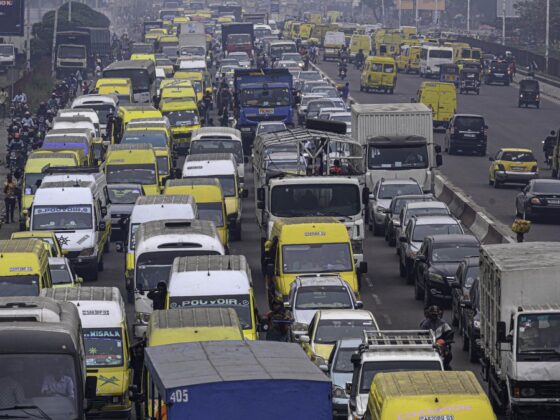
***Photo Mvemba Phezo Dizolele – Kinshasa La Belle

***Photo Mvemba Phezo Dizolele – Kinshasa La Belle

A discussion on Mobutu’s legacy with Bridget Conley-Zilkic of the United States Holocaust Memorial Museum in Washington, DC.

BRIDGET CONLEY-ZILKIC: With me today is Mvemba Dizolele, who is a writer and journalist. Thank you and welcome to the show.

MVEMBA DIZOLELE: Thank you very much, Bridget, for having me.

BRIDGET CONLEY-ZILKIC: Can you take us back a little bit to the time you mentioned how young, for instance, Mobutu was at his first coup. At that moment, you have Congo coming out of its colonial period. What are the questions that the Congolese people are struggling with? What are the questions that will frame this new country?

MVEMBA DIZOLELE: The big questions of the day in 1960 or before 1960. One is freedom. People want freedom. Enough already, because the Belgians had been here since 1885. So people wanted independence. Remember, it’s after World War II, and some Congolese had fought in World War II. They’ve seen what else is out there. There’s this big movement called the Negritude. A lot of African writers living in Europe, especially in France writing about the black consciousness.

January 21, 2008

Pascal Kambale: Ce Que le Kenya Aurait Dû Apprendre du Congo

Filed under: Nation-Building, Human Rights, Guest Commentary, Violence, Guest Column — Mvemba @ 10:19 am

***Photo Mvemba Phezo Dizolele – Pro-Bemba Rally, Mbandaka, Equateur

Par Pascal Kambale  

Eldoret, c’est la petite ville du Rift Valley kenyan que le président Daniel Arap Moi choisit pour réunir le 3 juin 2000 ses homologues rwandais Paul Kagame et congolais Laurent-Désiré Kabila autour d’un sommet sur « la situation politique et sécuritaire dans leurs pays respectifs et dans la région des Grands Lacs. » Un communiqué pauvrement écrit et long de quatre petits paragraphes avait des difficultés à cacher le fait que le sommet, convoqué quelques mois seulement après les accords de Lusaka, ne visait aucune initiative diplomatique importante. En fait, nombreux au Kenya ont soupçonné qu’en réalité le président Moi voulait ce sommet pour des besoins de marketing politique personnel.

December 5, 2007

UN Sepecial Investigation into Kinshasa Events of March 2007: Preliminary Findings

Filed under: Congo, UN, MONUC, Human Rights, Opposition, UN Special Reports — Mvemba @ 5:45 pm

Photo Mvemba Phezo Dizolele – Congolese Flagi

Photo Mvemba Phezo Dizolele – Congolese Flag

In the spirit of transparency, which is needed in moving Congo to the next step in its long march to stability and security, a copy of the preliminary findings from MONUC’s special investigation into the Kinshasa events of March 2007, which led Jean-Pierre Bemba into exile, is attached below.

For the past few years, MONUC has played a criticical role in keeping a semblance of order in DRC. This is particularly true for eastern Congo, where only God knows what would have happened had it not been for a strong United Nations military presence.

Despite the many problems that plague peacekeeping operations in DRC — sexual abuses, gun smuggling, mineral trafficking – the blue helmets have done more than just deter the escalation of conflict. The UN has helped run and manage Congo through these tumultuous years.

Have You Been to Panzi?

Filed under: Congo, S. Kivu, Human Rights, Health Issues, Justice, Rape — Mvemba @ 5:36 am

***Photo Mvemba Phezo Dizolele – Panzi Hospital, Bukavu, Sud Kivu

***Photo Mvemba Phezo Dizolele – Panzi Hospital, Bukavu, Sud Kivu

If you have been to Bukavu, then you have probably heard of Panzi. If you have never been to Bukavu, all the same – you should know about Panzi. Located around 30 to 45 minutes from downtown Bukavu, this suburban is infamous around the world for one reason – the Panzi Hospital.

I heard of Panzi Hospital for the first time in 2004 while I served as a guide and interpreter to a civil society leader from Bukavu visiting in Washington, DC. Her stories were gruesome. She spoke of rape as a weapon of war. Rapes and more rapes. She brought the war to Washington, to the United States Congress, USAID, to the State Department.

Everywhere she went she spoke of the hundreds and thousands of women who have been raped – at gunpoint. Raped by militiamen. Raped by elements of the FARDC, the Congolese army. She cited statistics, the kind that makes one cry. She talked about Panzi Hospital — the place where some of these rape victims, the lucky ones, go for treatment.

Panzi Hospital Perspectives

Filed under: Congo, S. Kivu, Human Rights, Health Issues, Rape — Mvemba @ 5:10 am

***Photo Mvemba Phezo Dizolele – Perspectives -- Panzi Hospital, Bukavu, Sud Kivu

***Photo Mvemba Phezo Dizolele – Panzi Hospital, Bukavu, Sud Kivu

October 2, 2007

Speaking of Justice

Filed under: Congo, Elections - Congo, Justice — Mvemba @ 10:21 am

***Photo Mvemba Phezo Dizolele -- La Prison Centrale, Mbandaka, Equateur

***Photo Mvemba Phezo Dizolele – La Prison Centrale, Mbandaka, Equateur

How do you keep bad guys behind these walls — when you cannot even secure the main entrance?


August 31, 2007

Pascal Kambale — Assassinat de Serge Maheshe : à la douleur, la justice ne doit pas ajouter l’insulte d’un procès bâclé

Filed under: Congo, MONUC, S. Kivu, UN Misconduct/Abuses, Justice — Mvemba @ 10:39 am

****Photo Mvemba Phezo Dizolele -- Boys at Kadutu Markets in Bukavu, South Kivu

****Photo Mvemba Phezo Dizolele — Boys at Kadutu Market in Bukavu, South Kivu

Assassinat de Serge Maheshe : à la douleur, la justice ne doit pas ajouter l’insulte d’un procès bâclé

Par  Pascal Kambale

Le Potentiel – Kinshasa

Edition 4114 du Samedi 01 Septembre 2007

Après le ridicule procès de l’assassinat de l’activiste des droits de l’homme Pascal Kabungulu en 2005, Bukavu vient de servir de cadre à un autre procès qui ne fera pas gagner aux magistrats une place enviable dans l’estime des Congolais.

Dans l’affaire de l’assassinat de Serge Maheshe, journaliste de la Radio Okapi, le tribunal militaire de garnison de Bukavu a condamné à mort le 28 août dernier, quatre personnes, Fredy Bisimwa et Mugisho Mastakila, d’une part, Alain Mulimbi et Serge Muhima, d’autre part. Deux couples que tout sépare et qu’absolument rien ne destinait à un sort commun. Alors que Serge Muhima et Alain Mulimbi, deux jeunes gens pourvus d’une solide éducation, étaient les meilleurs amis de Serge Maheshe, personne dans l’entourage de ce dernier ne connaissait Fredy Bisimwa et Mugisho Mastakila, « deux individus visiblement anormaux parce qu’intoxiqués ou drogués » d’après des parents de Serge et Alain. Les deux couples représentaient chacun l’une des deux pistes d’enquête possibles et les magistrats ont choisi la piste la plus invraisemblable, la plus ridicule et la moins crédible.

August 16, 2007

By Fidel Lumeya: Restorative Justice in Post-Conflict Reconstructive Society from an African Tradition Perspective

Filed under: Nation-Building, Guest Commentary, Guest Column, Justice — Mvemba @ 8:37 pm

***Photo Mvemba Phezo Dizolele -- Tribunal in Tchomia, Ituri

***Photo Mvemba Phezo Dizolele – Tribunal in Tchomia, Ituri

By  Fidel Ayu Lumeya

Introduction 

Any given society or community confronted by crimes and conflict has an obligation to face them directly, to eradicate them rather than ignoring them. There exists many ways of responding to crimes and any given society has to make a choice. These choices vary between what Zehr (1998) has called the three R’s of justice: Restorative, Retributive or Revenge. Many countries around the world have chosen revenge and retribution as the dominant form of legal justice in response to the crime they are facing. The outcome of such a choice is that, according to many recent studies on the modern justice system, the incarcerated population grows rapidly rather than decreasing.

This paper explores (1) the wisdom of African traditional society, before the colonial period and the way they dealt with the victims of injustice, offenders and the whole community. The values of Restorative Justice that led them choose between Restorative, Retributive and Revenge as model of justice (2), what they had in mind to achieve by choosing the RJ, its goals (3),

I. Restorative Justice: The Wisdom of African traditional society

August 13, 2007

Rest in Peace, Madilu

Filed under: Congo, Arts, Music — Mvemba @ 10:56 am

Photo Mvemba Phezo Dizolele -- Madilu System (in Black) and Papa Wemba, Kinshasa

****Photo Mvemba Phezo Dizolele — Madilu System (in Black) and Papa Wemba, Kinshasa

In the last few weeks the Congolese have seen several of their eminent countrymen die. Kisombe Kia Kumwisi, Samba Kaputo and others. Last weekend, we were all shocked to learn about Madilu System’s passing. Born Jean de Dieu Bialu Madilu, he has left his mark on Congo’s rich musical scene. He is affectionately remembered as Ramses II or Le Grand Ninja – and rightfully so.

For the Congolese, music is a pillar of life. Madilu’s contributions are broad, considering that he performed with some of the great artists of his time, including both Rochereau Tabu Ley and Franco Luambo Makiadi. He collaborated on classics such as Mario, Ofela and Mamou.

****Photo Mvemba Phezo Dizolele -- Madilu System at Papa Wemba's Birthday Concert, Kinshasa

****Photo Mvemba Phezo Dizolele — Madilu System (in Black) at Papa Wemba’s Birthday Concert, Kinshasa

In recent few weeks I often saw Madilu strolling in the lobby of the Grand Hotel in Kinshasa. Always low key and content. I enjoyed his sense of humor when he showed up unannounced at Papa Wemba’s birthday concert this summer and stole the show, forcing Bana Malongi to change the program. He was a man of spontaneous joy. He will be missed. Okendeke malamu Madilu.

August 10, 2007

In Search of Congo’s Coltan

Filed under: Congo, S. Kivu, Mines, Coltan, Rwanda, Mining Contracts, Smuggling — Mvemba @ 12:42 am

Photo Jeca Taudte -- Coltan Processing, Bukavu, South Kivu

****Photo Jeca Taudte — Coltan Processing, Bukavu, South Kivu

Bukavu is perched high above Lake Kivu, gently encroaching on the placid body of water between Rwanda and Congo. Once known as the pearl of Congo because of its beautiful climate and mountains, the Bukavu I found last summer barely resembles the famed city I heard about as a child.

In the past ten years, South Kivu province and its capital city of Bukavu have been known for two things: insecurity and coltan. I came for both. In anticipation of the country’s first multiparty elections in four decades, I wanted to understand the potential effect of insecurity on the elections and learn first-hand the role minerals such as coltan play in fueling insecurity.

Four times the size of France, and as big as the United States east of the Mississippi river, Congo holds 80 percent of the world’s reserves of coltan, a heat-resistant mineral ore widely used in cellular phones, laptop computers and video games. The ore derives its name from a contraction of columbium-tantalite, the scientific nomenclature.